


Introduction au test du film étirable coloré
Le Test de film étirable coloré est une évaluation essentielle pour l'industrie de l'emballage, en particulier pour les films étirables utilisés pour fixer et emballer les produits pour l'expédition et le stockage. Les films étirables existent en différentes couleurs et formulations, et leurs performances doivent être testées pour s'assurer qu'ils répondent aux normes de résistance et de durabilité requises.
Cet article explore les essai de résistance à la traction des matières plastiques, en mettant l'accent sur la Test de film étirable coloré et son importance pour garantir des solutions d'emballage de haute qualité. Nous aborderons également des normes d'essai importantes telles que ASTM D882, qui fournissent des lignes directrices pour mesurer résistance à la traction du film et élongation.
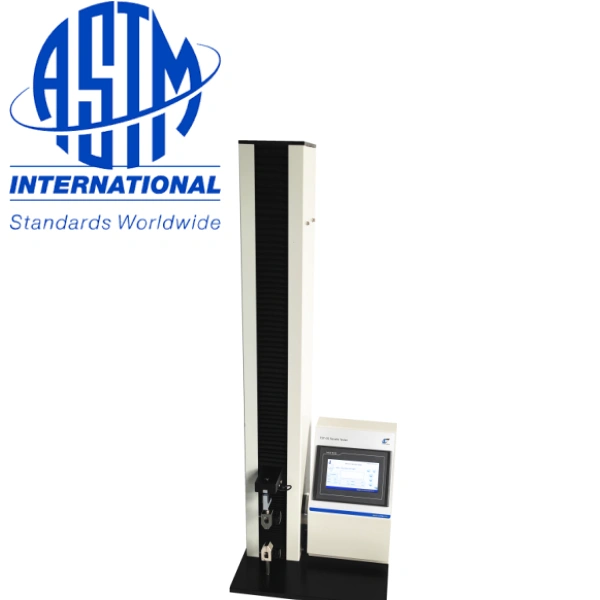
L'importance de l'essai de résistance à la traction plastique
Le essai de résistance à la traction des matières plastiques est utilisé pour évaluer la résistance d'un film plastique lorsqu'il est étiré. Ceci est particulièrement important pour films étirables, Leur fonction première est d'étirer et de maintenir fermement les produits tout en préservant leur durabilité pendant le stockage et le transport.
Comment fonctionne le test :
- Configuration du test : Un échantillon de film étirable est préparé dans une taille spécifique et placé dans une machine d'essai de traction. Le film est ensuite tiré à une vitesse contrôlée jusqu'à ce qu'il se rompe.
- Mesures prises : Au cours de l'essai, les deux résistance à la traction (la force nécessaire pour rompre le film) et élongation (la mesure dans laquelle le film peut être étiré). Ces paramètres sont essentiels pour déterminer si le film convient à diverses applications.
Ce test permet de s'assurer que le film étirable coloré a la résistance nécessaire pour résister aux contraintes qu'il subit pendant son utilisation, offrant ainsi une protection fiable aux produits emballés.
ASTM D882 : Le test standard pour les propriétés de traction
ASTM D882-18 est la méthode d'essai normalisée pour mesurer les propriétés de traction des feuilles plastiques minces, notamment films étirables. Cette méthode est largement reconnue dans l'industrie de l'emballage pour l'évaluation de la qualité de l'emballage. résistance à la traction, élongation, et d'autres propriétés critiques des films plastiques.
Éléments clés de l'ASTM D882 :
- Résistance à la traction : La force maximale que le film étirable coloré peut supporter avant de se rompre. Cette propriété est essentielle pour garantir que le film résistera aux contraintes subies pendant le processus d'emballage.
- Allongement à la rupture : La quantité de film qui s'étire avant de se rompre, exprimée en pourcentage de la longueur d'origine. Cette mesure est importante car elle indique la flexibilité du film et sa capacité à s'adapter à la forme des articles emballés.
- Module d'élasticité : Il mesure la rigidité du film. Un module plus élevé indique un matériau plus rigide, tandis qu'un module plus faible indique une plus grande flexibilité.
- Conditions d'essai : La norme ASTM D882 fournit des indications précises sur la manière de préparer l'échantillon, les conditions dans lesquelles le test doit être effectué et l'équipement nécessaire. En respectant ces normes, les fabricants peuvent s'assurer que leurs film étirable coloré fonctionne de manière cohérente et fiable.
L'utilité du test d'élongation pour l'évaluation des films étirables
Le essai d'élongation est un élément essentiel de la test de film étirable coloré, Cette propriété est particulièrement importante dans l'industrie de l'emballage, où le film étirable doit épouser étroitement la forme du produit sans se rompre ou se déchirer. Cette propriété est particulièrement importante dans l'industrie de l'emballage, où le film étirable doit épouser étroitement la forme du produit sans se rompre ni se déchirer.
Importance de l'élongation dans les films étirables :
- Extensibilité : La capacité à s'allonger sans se rompre est une caractéristique essentielle des films étirables de haute qualité. Un film ayant de bonnes propriétés d'allongement peut être étiré pour s'adapter à des articles de forme irrégulière sans se déchirer.
- La résilience : Un film qui peut s'allonger de manière significative reprendra sa forme initiale une fois la force d'étirement supprimée, ce qui le rend tout à fait adapté à l'emballage de marchandises en toute sécurité.
En menant essais d'élongation dans le cadre de la Test de film étirable coloré, Les fabricants peuvent ainsi s'assurer que leurs films sont capables d'offrir la résistance et la flexibilité nécessaires aux diverses applications d'emballage.
Le rôle de la résistance à la traction du film dans l'emballage
Résistance à la traction du film est une mesure essentielle de la durabilité et de la performance des films étirables. Films étirables colorés sont couramment utilisés dans les applications d'emballage où la visibilité et la résistance sont requises. Un film doté d'une grande résistance à la traction est capable de supporter les contraintes de l'emballage, y compris celles rencontrées pendant le transport et le stockage.
Principaux avantages d'une résistance élevée à la traction pour les films étirables :
- Protection pendant le transit : Un film avec des résistance à la traction peut empêcher les produits de se déplacer pendant le transport et les protéger contre les dommages.
- Capacité de maintien de la charge : Les films étirables résistants peuvent maintenir en toute sécurité des charges plus lourdes, réduisant ainsi le risque d'endommagement du produit.
- Durabilité: La résistance élevée à la traction garantit que le film étirable conserve son intégrité tout au long du processus de la chaîne d'approvisionnement.
Conclusion : Pourquoi le test du film étirable coloré est-il essentiel ?
Le Test de film étirable coloré joue un rôle crucial en garantissant la fiabilité et la performance des films étirables utilisés dans l'emballage. En testant des propriétés telles que résistance à la traction, élongation, et module du film, Les fabricants peuvent ainsi s'assurer que leurs films étirables colorés sont suffisamment solides, flexibles et durables pour répondre aux exigences de l'emballage moderne.
À Instruments cellulaires, Nous offrons des services avancés de essais de traction un équipement conçu pour fournir des mesures précises et exactes pour films étirables colorés et d'autres matières plastiques. Nos services testeurs de traction sont capables d'effectuer des essais conformément aux ASTM D882, Les produits doivent être conformes aux normes de l'industrie.
Si vous recherchez des solutions d'essai fiables et de haute qualité, nos instruments peuvent vous aider à évaluer la résistance et la flexibilité de vos produits. films étirables, Ils sont conçus pour répondre à vos besoins en matière d'emballage. Contact Instruments cellulaires dès aujourd'hui pour en savoir plus sur nos solutions de test.

 Bulgarian
  Czech
Czech  Danish
  Greek
Greek  Estonian
  Finnish
  Hungarian
  Indonesian
  Lithuanian
  Latvian
  Norwegian
  Dutch
Dutch  Polish
  Romanian
  Slovak
  Slovenian
  Swedish
  Turkish
  Ukrainian
  Hebrew
  Thai
Thai  Vietnamese
  Afrikaans
  Amharic
  Moroccan Arabic
  Azerbaijani
  Belarusian
  Bengali
  Bosnian
  Welsh
Welsh  Persian
  Gujarati
  Hindi
Hindi  Croatian
  Armenian
  Kazakh
  Uzbek
Uzbek  Serbian
  Albanian