


Εισαγωγή
Tensile testing of polymers is a critical process used to assess the mechanical properties of plastic materials. This test is vital for determining how a polymer will perform under stress and strain, providing valuable insights into its durability and overall strength. Among the various standards used for polymer testing, ASTM D638 stands out as one of the most recognized methods for evaluating the tensile properties of plastics.
This article will explore the tensile testing of polymers, focusing on the ASTM D638 standard, which is commonly used to measure properties such as yield strength, αντοχή σε εφελκυσμό, and the overall tensile properties of plastics.
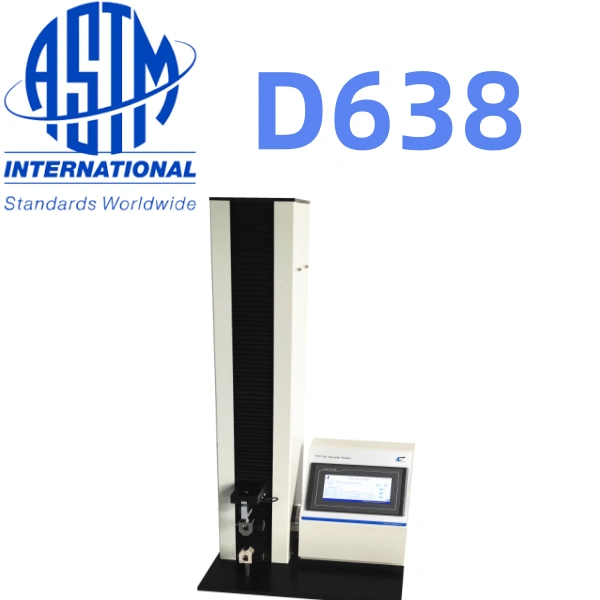
What is the Tensile Testing of Polymers?
Tensile testing is the process of applying a uniaxial force to a material, typically a plastic specimen, until it fails (breaks or deforms). The objective of this test is to assess how the material behaves under stress and strain, and to measure its ability to stretch or resist elongation before breaking.
The main parameters measured in tensile testing include:
Elongation at Break: The percentage increase in length a material can endure before it breaks, which indicates its ductility and ability to stretch without failure.
Αντοχή εφελκυσμού: The maximum stress a material can withstand without failure. This property is critical for determining how a material will behave when subjected to external forces in real-life applications.
Yield Strength: The amount of stress a material can withstand before it begins to deform plastically. This property is particularly important for ensuring that a material maintains its structural integrity under stress.
ASTM D638: The Standard for Tensile Testing of Polymers
ASTM D638 is the standard test method used to determine the tensile properties of plastic materials. This standard specifically covers the testing of dumbbell-shaped specimens and reinforced plastics under controlled conditions, such as temperature, humidity, and testing machine speed.
Key Aspects of ASTM D638
Test Specimens: The test is generally carried out on specimens that are dumbbell-shaped or other suitable forms, depending on the material. The standard also outlines the dimensions and thickness of the specimen to ensure consistent results.
Testing Conditions: ASTM D638 requires the testing environment, including temperature and humidity, to be controlled. This ensures that the results are accurate and that the material is evaluated in the most realistic conditions possible.
Test Machine: The test is performed using a constant-rate-of-crosshead movement testing machine that applies tension until the specimen breaks. This machine needs to be calibrated to ensure the correct δοκιμή αντοχής σε εφελκυσμό αποτελέσματα.
Ταχύτητα δοκιμών: The speed at which the material is pulled plays a significant role in the results. ASTM D638 outlines the testing speeds for different types of polymers and sample thicknesses.
Importance of Yield Strength and Tensile Strength in Polymer Testing
Δοκιμή αντοχής σε εφελκυσμό: One of the primary measurements in tensile testing of polymers είναι το αντοχή σε εφελκυσμό, which indicates the maximum stress a material can withstand before breaking. This value is essential in determining how a polymer will perform under load in real-world applications.
Yield Strength: Το yield strength is another critical factor, representing the amount of stress a polymer can endure before it permanently deforms. Understanding this property is essential for ensuring that the material will maintain its structural integrity under stress.
Elongation at Break: Tensile testing also provides data on the επιμήκυνση στο σπάσιμο, which refers to how much a material can stretch before it fractures. This is a key factor in understanding the flexibility and ductility of polymers.
Understanding the Tensile Properties of Polymers
1. Αντοχή εφελκυσμού
Ο αντοχή σε εφελκυσμό of a polymer is the maximum stress it can endure while being stretched. This property is especially important for materials used in engineering applications where the material will be exposed to external forces.
For instance, packaging materials, automotive components, and medical devices often require plastics with high tensile strength to withstand mechanical stress during use, handling, and transportation.
2. Yield Strength
Ο yield strength is the point at which a polymer begins to deform permanently. Beyond this point, the material will not return to its original shape once the force is removed.
In practical applications, yield strength is important because materials subjected to stresses near or beyond this point may experience permanent deformation, which could compromise the structural integrity of the material. For instance, in packaging, yield strength is essential for ensuring the container maintains its shape under the weight of its contents.
3. Elongation at Break
Επιμήκυνση κατά τη θραύση measures the extent to which a polymer can stretch before breaking. A higher elongation at break indicates a more flexible material, which can be useful in applications where flexibility and stretchability are required, such as in stretch films and medical tubing.
While αντοχή σε εφελκυσμό is critical for structural integrity, επιμήκυνση στο σπάσιμο helps determine how far a material can stretch before it fails, providing important data on its ductility και ελαστικότητα.
Applications of Tensile Testing of Polymers
1. Βιομηχανία Συσκευασίας
In packaging, tensile testing of polymers helps determine the δύναμη και αντοχή of materials such as plastic films, bottles, and containers. This testing ensures that the material can withstand mechanical stresses during transportation, storage, and handling, while still maintaining its integrity.
For example, plastic films used in food packaging must resist punctures and tears without breaking, while bottles need to withstand internal pressures and external forces. Tensile testing ensures these materials meet specific performance standards before they are mass-produced.
2. Medical Devices and Pharmaceuticals
For medical devices and pharmaceutical packaging, materials must not only be strong but also safe and reliable. The yield strength και αντοχή σε εφελκυσμό of the polymers used in these applications help ensure that they will not crack or deform under normal handling or when subjected to stress during their use.
For example, medical packaging materials like IV bags and syringes need to maintain integrity while withstanding pressures or mechanical stresses during use, ensuring that drugs remain secure and sterile.
3. Automotive and Aerospace
In automotive and aerospace industries, the tensile properties of polymers are crucial for ensuring that parts can withstand significant stress without failure. For example, polymer composites used in vehicle bodies or aerospace structures need to be able to bear loads, resist impacts, and handle long-term mechanical stress.
Σύναψη
Tensile testing of polymers is a critical aspect of materials science and quality control. By using ASTM D638, manufacturers can accurately assess the αντοχή σε εφελκυσμό, yield strength, και επιμήκυνση στο σπάσιμο of polymer materials, ensuring that they meet the performance requirements for various applications.
Whether in συσκευασία, medical devices, ή automotive engineering, understanding the tensile properties of polymers is essential for designing materials that are durable, safe, and fit for purpose. With the proper tensile testing equipment, such as Cell Instruments’ tensile testers, you can ensure the consistency and reliability of your products, helping to maintain high standards and meet regulatory requirements.
FAQ
1.What is the tensile strength of a polymer?
Αντοχή σε εφελκυσμό of a polymer refers to the maximum stress a material can withstand while being stretched before breaking. This property is crucial for ensuring the mechanical strength of polymers in various applications, such as packaging, automotive parts, and medical devices.
2.What does ASTM D638 testing method apply to?
Ο ASTM D638 standard testing method is applicable to most polymer materials, including films, plastics, rubbers, and composites. It measures the αντοχή σε εφελκυσμό, yield strength, και επιμήκυνση στο σπάσιμο of materials, making it essential for quality control, engineering design, and material development.
3.Why is tensile testing necessary?
Tensile testing helps determine how materials behave under stress and is used to evaluate their performance in real-world applications. By measuring properties like elastic modulus, yield point, και maximum tensile strength, tensile testing ensures that materials meet design and performance requirements.
4.What is the difference between yield strength and tensile strength?
Yield strength refers to the maximum stress a material can withstand without permanent deformation, while αντοχή σε εφελκυσμό is the maximum stress a material can endure before it fractures. In other words, yield strength marks the point where material starts to deform, and tensile strength indicates the point where it breaks.
5.How do you select the right tensile testing machine?
When selecting a tensile testing machine, it’s important to choose one that matches the material’s properties and the testing requirements. For flexible materials like films, a high-precision, low-load tester is ideal. For thicker or more rigid polymers, a machine with higher load capacity and precise control is necessary. Ensuring the machine complies with standards like ASTM D638 is key to obtaining reliable results.

 Български
  Čeština
  Dansk
Dansk  Eesti
Eesti  Suomi
Suomi  Magyar
  Bahasa Indonesia
  Lietuvių kalba
  Latviešu valoda
  Norsk bokmål
  Nederlands
  Polski
  Română
  Slovenčina
  Slovenščina
  Svenska
  Türkçe
  Українська