


The pallet wrap film test is a crucial method in assessing the performance and durability of films used in packaging, particularly stretch films for pallet wrapping. This test ensures that the film can withstand various stresses during storage and transportation, making it an essential part of quality control in packaging applications. Manufacturers rely on these tests to meet packaging standards and guarantee that their films can maintain integrity throughout their lifecycle.
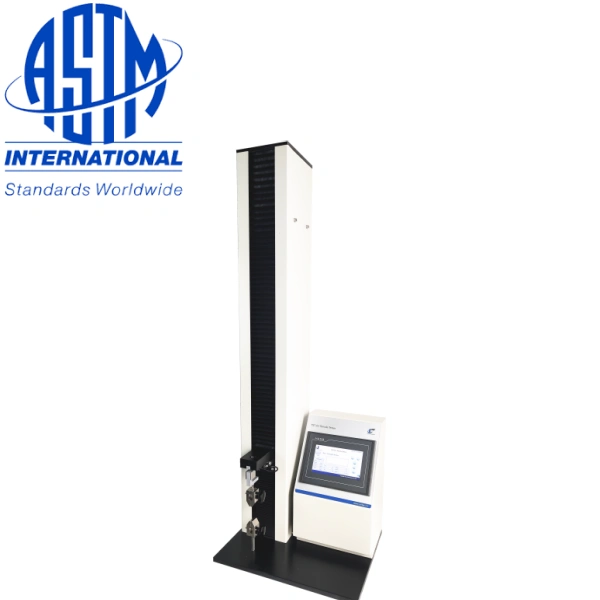
Elongation Test: Measuring Stretchability of Pallet Wrap Film
One of the key tests for pallet wrap films is the elongation test, which evaluates how much the film can stretch under tension before breaking. This test is vital as it determines the stretchability and flexibility of the material, which is crucial for films that are used to wrap and secure products on pallets. Films with higher elongation can cover more surface area, enhancing their ability to secure goods tightly without tearing.
During the elongation test, the film is subjected to controlled tension until it reaches its breaking point. The elongation percentage is calculated by dividing the film’s extension by its original length and multiplying by 100. This result helps determine the maximum stretch capacity of the material and provides insight into its overall performance in practical applications.
ASTM D882: Testing Tensile Properties of Thin Plastic Films
For accurate and standardized testing, ASTM D882 is often used in the pallet wrap film test. This standard test method measures the tensile properties of thin plastic sheeting, including stretch films. The test provides valuable data on the tensile strength, modulus, and elongation at break for films. These properties are critical in determining how well a film will perform when subjected to different forces during handling and transportation.
According to ASTM D882, the test involves the following steps:
- Specimen Preparation: The film specimen is prepared with a uniform width and thickness, typically 50 mm in length or more than twice the grip separation.
- Tensile Testing: The film is loaded into a tensile testing machine and pulled apart at a constant rate. Force and elongation data are recorded during the test.
- Data Analysis: The test calculates the tensile strength (force per unit area), elongation at break, and modulus of elasticity (stiffness) of the material.
This method is crucial for ensuring the pallet wrap film meets the required durability standards and can handle the stresses of packaging and transport.
Elmendorf Tear Test: Assessing Film Tear Resistance
Another important test for pallet wrap films is the Elmendorf tear test, which evaluates the tear resistance of the film. This test determines how easily a film can tear when subjected to stress, which is critical for packaging materials that need to remain intact during use.
The Elmendorf tear test involves applying a sharp blade to the film and measuring the force required to propagate the tear. A film with high tear resistance is less likely to break or tear under tension, which is essential for protecting the products being packaged. This test is often conducted alongside the elongation and tensile tests to ensure a comprehensive evaluation of the film’s performance.
Impact Resistance Test: Evaluating Film Durability
The impact resistance test is designed to simulate the physical stresses that films might encounter during handling, such as impacts from handling equipment or accidental drops. This test measures how well the film can absorb energy without rupturing, ensuring that it remains intact and effective during transportation.
Films with higher impact resistance are better equipped to handle rough handling and reduce the risk of product damage during transit. This test is particularly important for films used in industries where products are often subjected to heavy handling or shipping conditions.
Ensuring Quality with Pallet Wrap Film Tests
The pallet wrap film test is essential for ensuring the quality and reliability of films used in packaging. By testing key properties such as elongation, tear resistance, and impact resistance, manufacturers can ensure their films meet industry standards and perform well under the stresses of packaging and transportation.
Cell Instruments provides advanced tensile testers that meet the requirements of ASTM D882 and other relevant standards, offering precise measurements of pallet wrap film properties. These tests allow manufacturers to optimize their materials for strength, flexibility, and durability, ensuring their products are securely packaged and protected during transit.

 Bulgarian
  Czech
Czech  Danish
  Greek
Greek  Estonian
  Finnish
  Hungarian
  Indonesian
  Lithuanian
  Latvian
  Norwegian
  Dutch
Dutch  Polish
  Romanian
  Slovak
  Slovenian
  Swedish
  Turkish
  Ukrainian
  Hebrew
  Thai
Thai  Vietnamese
  Afrikaans
  Amharic
  Moroccan Arabic
  Azerbaijani
  Belarusian
  Bengali
  Bosnian
  Welsh
Welsh  Persian
  Gujarati
  Hindi
Hindi  Croatian
  Armenian
  Kazakh
  Uzbek
Uzbek  Serbian
  Albanian